
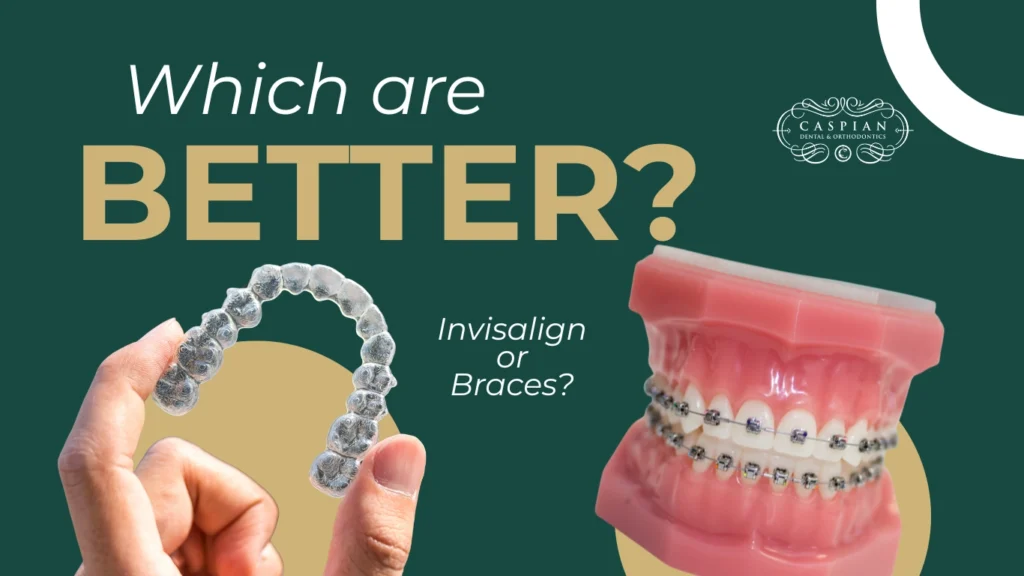
When it comes to achieving a straight, beautiful smile, patients today have more options than ever before. Two of the most popular treatments are clear aligners, like Invisalign, and traditional metal braces. Both methods are effective, but they work differently and offer unique benefits. At Caspian Orthodontics, we believe that understanding your options is the first step toward making the best decision for your smile and confidence.
A New Era of Orthodontics
For decades, traditional braces have been the standard solution for aligning teeth. However, the introduction of Invisalign revolutionized the orthodontic world, offering a more discreet and comfortable way to achieve a straight smile. Today, many celebrities and influencers—such as Kendall Jenner and Justin Bieber—have opted for clear aligners, making them a stylish and modern choice.
Understanding Traditional Braces
Traditional braces use metal brackets and wires to gradually move your teeth into their ideal position. Orthodontists make adjustments during scheduled visits, ensuring steady progress.
Benefits of Traditional Braces:
- Effective for complex cases: Ideal for severe misalignments or bite issues.
- Predictable results: The fixed design ensures constant tooth movement.
- Affordable option: Often less expensive than aligners, depending on the case.
Considerations:
- They are visible and may affect self-confidence for some patients.
- Regular visits are required for tightening and adjustments.
- Certain foods must be avoided to prevent damage to the brackets.
What Is Invisalign?
Invisalign uses a series of custom-made, clear aligner trays designed to gently shift teeth into place. Each set is worn for about one to two weeks before switching to the next. Since they are removable and nearly invisible, they’ve become a favorite among teens and adults alike.
Benefits of Invisalign:
- Discreet appearance: Almost invisible, making them perfect for professional and social settings.
- Removable: Patients can eat, brush, and floss without restrictions.
- Comfortable: Smooth plastic trays eliminate the discomfort caused by wires or brackets.
- Shorter appointments: Fewer in-office visits compared to traditional braces.
Considerations:
- Best suited for mild to moderate cases (though advancements allow treatment of more complex cases now).
- Requires discipline to wear aligners for 20–22 hours daily.
- May be slightly more expensive depending on your treatment plan.
Lifestyle Factors to Consider
Your daily habits, career, and personal preferences can play a big role in deciding between Invisalign and traditional braces. For instance:
- If you’re in a public-facing role or want a discreet option, Invisalign is an excellent choice.
- If your case is more complex or you prefer a lower-maintenance option, traditional braces may be better.
- If you or your teen play sports, Invisalign aligners can be removed during activity, offering extra protection.
Interestingly, many celebrities have chosen Invisalign because it aligns perfectly with their on-camera appearances. This growing trend has made clear aligners not only a dental treatment but also a fashion-forward decision.
Treatment Time: Is One Faster Than the Other?
Both treatments typically take 12 to 24 months, but this varies depending on the complexity of the case. Invisalign may offer slightly shorter treatment times for mild cases since aligners are precisely planned with digital technology. Traditional braces, however, remain unmatched in certain orthodontic movements, especially for more complex issues.
Comfort and Maintenance
One of the biggest differences between the two options is comfort. Invisalign trays are smooth and custom-fit, reducing irritation to the gums and cheeks. Traditional braces, while highly effective, can sometimes cause minor discomfort after adjustments.
Maintenance is also different. Braces require extra attention when brushing and flossing to keep teeth and gums healthy. Invisalign aligners, on the other hand, can be removed for easy cleaning, promoting better oral hygiene during treatment.
Cost Considerations
Cost can vary based on the length and complexity of treatment. While Invisalign may have a higher upfront cost, many patients find the convenience and aesthetics worth the investment. At Caspian Orthodontics, we offer flexible payment options to make both treatments accessible and stress-free.
Why Choose Caspian Orthodontics
Choosing the right orthodontic provider matters as much as the treatment itself. At Caspian Orthodontics, our experienced team combines advanced technology with personalized care to help you achieve the smile you’ve always wanted. We tailor each treatment plan to your needs, ensuring optimal results with comfort and convenience. Whether you prefer Invisalign or traditional braces, we’ll guide you every step of the way.
Ready to transform your smile? Schedule your complimentary consultation today and let us help you make the best decision for your orthodontic journey.
FAQs
- Is Invisalign as effective as braces? Yes, Invisalign can be just as effective for many cases. For complex cases, traditional braces may be recommended.
- How often do I need to visit the orthodontist with Invisalign? Visits are typically less frequent than with braces, usually every 6–8 weeks.
- Can teens use Invisalign? Absolutely! Invisalign Teen is designed specifically for younger patients and can be just as effective as traditional braces.
- Are braces or Invisalign more painful? Both treatments can cause some discomfort as teeth shift, but Invisalign is often considered more comfortable due to its smooth aligners.
- How can I know which treatment is right for me? The best way is to schedule a consultation with an orthodontic specialist who can evaluate your case and recommend the most effective option.